|
Farewell to Gotti |
|
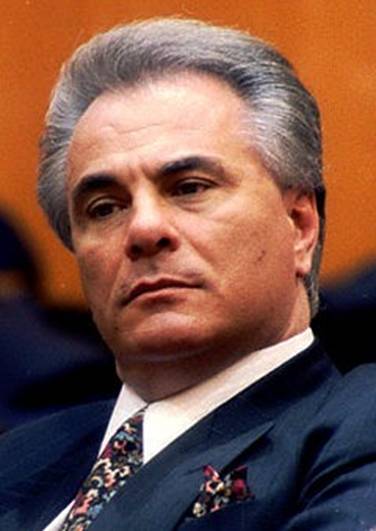
By Eve Berliner John Gotti: Man of power, charisma and danger. |
|
By Eve Berliner He was the quintessential gangster, a
figure of dark and tantalizing glamour, guttural, vain, iron-willed and
remorseless. We see him in his old haunts in front of
the Ravenite Social Club on "Naughty, naughty," he would
intone with defiance to nearby stakeout agents who scrutinized his every
move. Surrounded by bodyguards, as he stepped
deftly into his Mercedes and proceeded to one of * * * He was not immune from fate. Serious
illness would strike in 1998. In the advanced stages of disease, the
indomitable figure of disdain and daring grew ravaged, confined to a
wheelchair. Chemotherapy was halted after a failed
third round of killer drugs could not decimate the cancer that had gotten him
by the throat like one of his old jugular enemies, an unrelenting cancer of
the throat in a fight to the death. Doctors at the Incarcerated since June of 1992, in
solitary confinement 23 hours a day, John Joseph Gotti was locked in the cell
of mind and memory. * * * He would be haunted forever by the death
of his son, Frankie, 21 long years ago, Frankie's photograph always beside
him in the dark inner sanctum of the Bergin Hunt & Fishing Club in For John Gotti, there was a special
dream for Frankie that he never had for himself, that he would take to his
grave. The notice appeared, as always, on the
18th day of March: Gotti,
Frank Dear Frank: You are sadly
missed, deeply loved and never forgotten for even one moment. Missing you
always. Mom and Dad The bicycle darting out of nowhere in
front of the oncoming vehicle. The radiant, smiling little boy stolen off the
earth at age 12. "Look at that, Four fucking
A's!" his father had exclaimed with pride to associates several
days earlier as he examined his young son's report card. Taking a shortcut, Frank's borrowed motorized
minibike darted into the street from behind a double-parked dumpster as John
Favara, aged 51, a neighbor of the Gotti's on his way home from his job as a
manager at a furniture company, slammed into him with his car. He never saw
the boy until the moment of impact. The death was ruled accidental. No
charges were brought against Favara. But a series of death threats ensued,
anonymous and menacing. Favara, his wife and two adopted children, made the
decision to leave the neighborhood. It was a hot July day, four months after
Frank's death, Gotti and his wife He has never been seen again. Gotti avowed no knowledge of the
disappearance. * * * His mother Fannie is still alive. His paternal grandparents, who sailed
steerage class from John Joseph Gotti,Jr., the fifth of 13
children, was born in the His father, for whom he was named,
worked erratically on and off as a day laborer in construction, for a menial
wage, and was a compulsive gambler. The deprivation was severe. "He never did nothin'. He never
earned nothin'. And we never had nothin," Gotti was to have stated. Therein the roots of his anger. The boy developed a hair-trigger,
fierce, and uncontrollable rage. He would slug it out in bloody fist fights
with fearless ferocity. "Bully. A discipline problem.", his school
record at He grew up in the South Bronx, at age 10
moved to Sheepshead Bay, Brooklyn, the family dispossessed one year later to
the working class neighborhood known as East New York. Johnny attended P.S.
178 from which he was suspended for fracturing a fellow student's skull in a
fight.
|
|
He was a fearsome intimidator. It was in Italian Harlem that he had
gotten his first glimpse of the Mafioso life. But Johnny Boy joined the street action,
running errands for the burly, slick- suited tough guys, brandishing a new
tattoo of a serpent on his right shoulder, barely attending school, and by
the time he dropped out for good, becoming a full-fledged member of a teenage
street gang and Cosa Nostra training ground called the Fulton-Rockaway Boys.
The boys filled their happy days with car thefts, stolen merchandise, ripping
off stores, mugging drunks and having repeated skirmishes with the police. Before long, the pompadoured, flashily
dressed, audacious young teenager had become a leader of the gang, running bets
for neighborhood bookies and collecting with vicious fists for the local loan
sharks. He was on his way. The path was chosen. * * * He lived by a primitive code: an eye for
an eye -- and the Mafia credo of "honor, respect and obedience."
Or else! His guiding philosophy of power was
epitomized by the 16th century politician and philosopher, Niccolo
Machiavelli author of "The Prince," whom Gotti, like Albert
Anastasia before him, revered -- the ends justify the means. Perhaps in the final days, he looked
back on his life with some tinge of sadness, remorse, some degree of
self-honesty, remembering those blissful days sailing in the blazing sun on
his cigarette boat in The darker hours would not intrude, the
blood-drenched, murderous days. His father Joseph passed away four days
after his final incarceration in Federal Prison on In the end, the enemy was Cancer. It was
merciless, as he was. His fate was sealed. The Gambino Prince, alone with himself,
with his defiance and pride, shackled. The demon had him by the throat. |