|
Copyright ã 2003 Kenneth Koyen.
All Rights Reserved [Terms and Conditions] Snapshots of Mary Welsh Hemingway By Kenneth Koyen
|
|
|
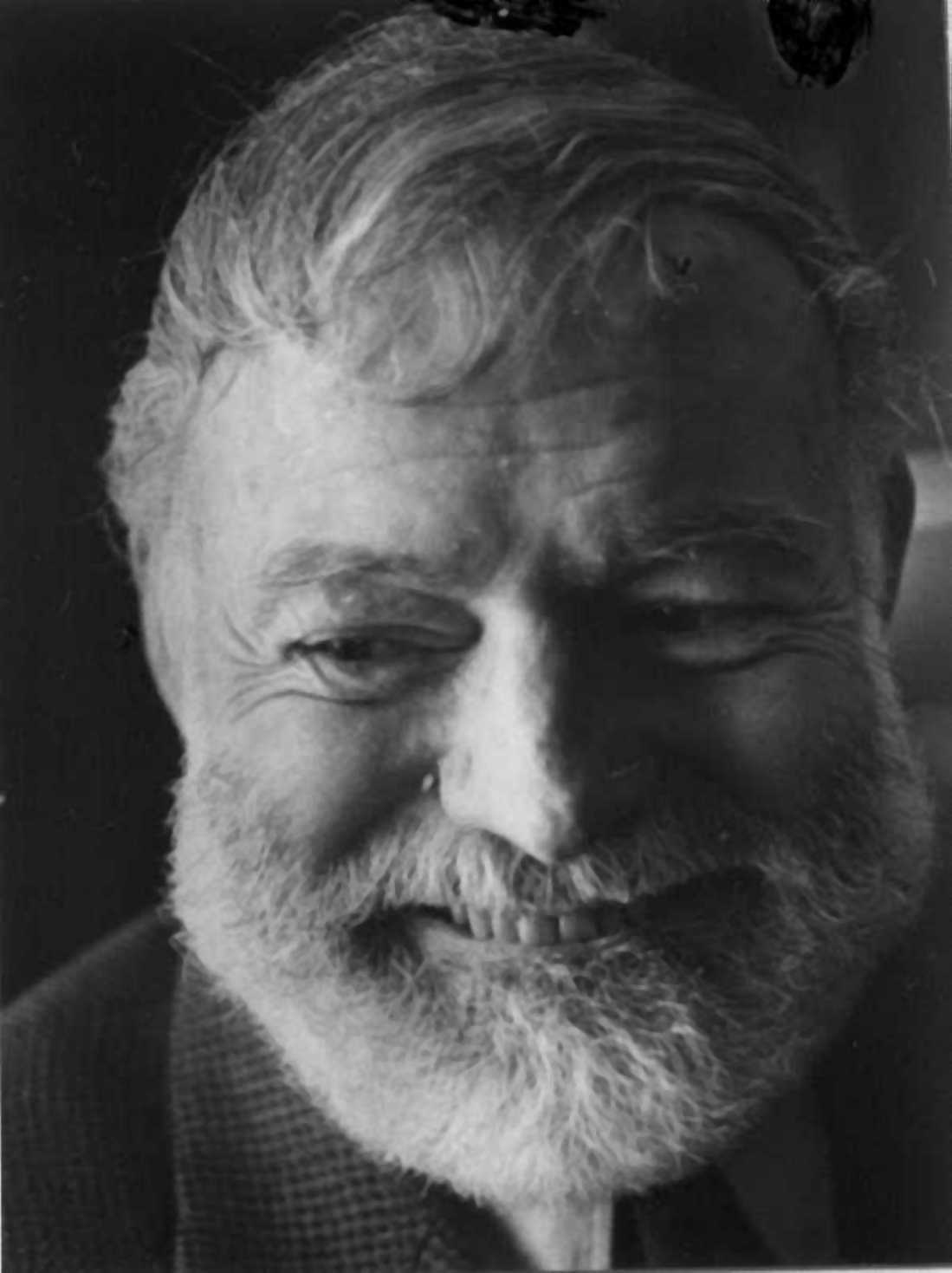
Photo by Morris Warman The legendary Ernest Hemingway.
|
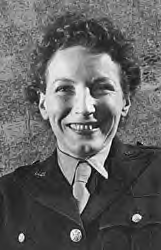
Mary
Welsh Hemingway |
|
By Kenneth Koyen The first time I met Mary Welsh was
during "The Phony War." It was the spring of 1940. Eight months
before Although I had taken French language
classes in college, I was far from fluent. I decided to better myself. As my
work at the paper began in the afternoon, my mornings were free. I enrolled
in a French language class for foreigners given by the Alliance Francaise. It
was held in the Sorbonne. I found about 20 people in the class. Most of them
were Poles who had fled the German invasion of their country. They appeared
to have the means to re-establish their lives in a new venue. One woman did not appear to be part of
the Polish group. She was not. She was American. We introduced ourselves. She
said that she was Mary Welsh and that she was a correspondent for the London
Daily Express at the paper’s I learned later that she was 32, the
daughter of a She landed a job at The Chicago Daily
News writing womens’ page stories. On a holiday trip to As our French classes went on we merely
nodded at each other. We did not chitchat. We gave our attention to our
instructor, an attractive young French woman who spoke English as well as she
spoke French. I cannot certify that our French improved markedly. But I do
know that the classes ended abruptly on May 10. Then the German Army launched
its assault against the Allies. "The Phony War" was over and the
world learned a new term, "Blitzkrieg." With the fall of I looked up a friend, Will Lang. He was
running the re-established bureau of TIME and I was introduced. I said,
"Hello," to Mary and reminded her that we had met as fellow
students. She briefly acknowledged the fact. I got the impression that she
did not wish to discuss any relationship with other men, no matter how
innocuous, in front of Hemingway. During the luncheon, Hemingway commanded
the conversation, I listened eagerly for a memorable quote that I could
retell. There were none. Their talk was about story coverage, past and
future. Mary had left the Daily Express. She and Hemingway were each
writing for TIME and As the talk continued I learned that
Hemingway was grandly billeted at the Hotel Ritz. It also became evident that
Mary was sharing his quarters. Mary’s maiden and writing byline name was, of
course, Mary Welsh. But her correct, legal, name was Mrs. Noel Monks. She had
married Monks, an Australian journalist, not long after she first arrived in Mary had met Hemingway in As the war continued Mary busily filed
her stories to TIME. But not long after our luncheon she attracted far more
attention from what she said than from what she wrote. She accused Andy
Rooney and two other correspondents of plagiarism. Rooney was then a staff
writer and war correspondent for the Army’s newspaper, The Stars and
Stripes. Rooney, who had met Mary several times, was astounded. The charge that he stole a story and words
from her copy still rankles Rooney. Today he says, "It’s just not
anything I would have done." The longtime, irascible sage of television
adds, "This was one of my earliest claims to fame." In 1945, a year after Hemingway and
Welsh began their lives together, Gelhorn divorced Hemingway. Mary managed to
divorce Monks in 1945, seven years after their marriage. After the war
Hemingway and Mary continued their adventurous celebrity existence together.
They traveled widely. He wrote his novels to popular and critical acclaim and
honors. They lived in his house in Before their marriage a woman friend of
Mary’s, who had had an earlier affair with Hemingway, spoke to Mary. The
friend warned that Hemingway could be "beastly." According to The
New York Times, he had once described Mary as "a useless, smirking
war correspondent," and "a scavenger." He once threw wine in
her face in front of friends. He once smashed her typewriter. The Times later
described her wedded existence as a "bruised life." They remained together even as matters
became more difficult for Mary. Hemingway began to decline mentally. He
suffered from delusions. He had a considerable fortune, but he feared
needlessly that his banker was mishandling it. Hemingway thought that the
U.S. Government had agents, including the FBI, shadowing him about
non-existent tax fraud. Because of these and other episodes,
Hemingway was examined and treated by physicians and psychiatrists. He was
taken to institutions, including the Mayo Clinic, and received a series of
drastic electro-shock treatments. Against Mary’s wishes he was released from
the Mayo Clinic and returned home to Ketchum. Early on the morning of The sound woke Mary. She left her
bedroom and raced down the stairs to find the body. She reported to the
police and press that Hemingway had shot himself accidentally while he was
cleaning his gun. She wrote later that she did not know why she said that. A.E. Hotchner, a writer and a frequent
companion of Hemingway, wrote that he could not fault Mary for covering up.
Hotchner thought that Mary was unprepared to accept what had happened and
unable to explain it. "What difference does it make?" he asked. Her
instinctive reaction was understandable. Suicide might tarnish the image of
the powerful writer, the fearless adventurer. Hemingway had once offered Dorothy
Parker, the wit and writer, a better word than "Courage." It was,
he said, "Guts." He defined "Guts" as "Grace under
pressure." But there was no "Grace" in suicide. It could be
seen as surrender and a final act of defeat. The police and the coroner ruled
that Hemingway’s death was suicide. Mary passed the following years writing
her autobiography, "How It Was." It was published in 1976. It might
well have been subtitled, "The Importance of Being Ernest’s Wife."
Overlong at 537 pages, it stressed passages of affection and love. On a lower
key, the difficulties, including those of the last years. The "it"
in the book’s title referred, of course, to life with Hemingway. Without
Hemingway the book could not have been written. If it had, it would not have
been published. Mary moved to In her last few years she became an
invalid and seldom left her
|
|